E Shram PMMVY ₹5000 Maternity Benefit Scheme All You Need to Know
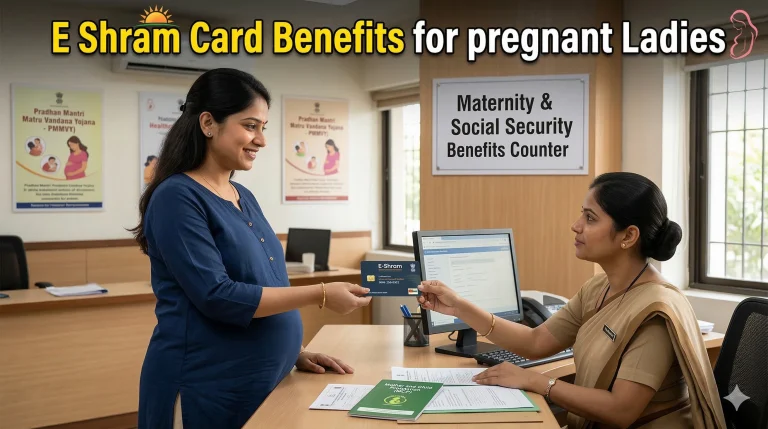
Welcoming a new member into the family is one of life’s most joyous milestones, but for many families in India, it also brings significant financial pressure. To ensure that health and nutrition don’t take a backseat during this critical time, the Government of India runs a flagship maternity benefit program popularly known as the “5,000 rs after delivery scheme” or the Pradhan Mantri Matru Vandana Yojana (PMMVY).
If you are looking for clear, updated information on how to claim these benefits in 2026, this article will guide you completely.
What is the PMMVY Scheme?
The Pradhan Mantri Matru Vandana Yojana (PMMVY) is a Direct Benefit Transfer (DBT) scheme launched by the Ministry of Women and Child Development. Its primary goal is to provide partial compensation for wage loss so that pregnant women can take adequate rest before and after delivery.
Beyond the cash incentive, the scheme is designed to “nudge” families toward better health practices, such as timely ANC (Antenatal Care) checkups and completing the child’s immunization cycle.
How Much Money Do You Get?
Under the revamped PMMVY 2.0 (Mission Shakti), the benefits are no longer limited to just the first child. The government has expanded the support to encourage the birth of the girl child as well.
1. For the First Child: ₹5,000
For the first living child, the benefit of ₹5,000 is disbursed in two main installments:
- First Installment (₹3,000): Provided upon the registration of pregnancy and at least one Antenatal Check-up (ANC) within six months from the Last Menstrual Period (LMP) date.
- Second Installment (₹2,000): Provided after the birth of the child is registered and the child has received the first cycle of vaccinations (BCG, OPV, DPT, and Hepatitis-B) usually by 14 weeks of age.
2. For the Second Child (Girl Child Only): ₹6,000
In a major push for gender equality, the government provides a higher incentive of ₹6,000 for the second child, provided the child is a girl. This is paid out in a single installment after birth and the completion of the required vaccinations.
Pro Tip: Many mothers are also eligible for the Janani Suraksha Yojana (JSY). This provides an additional ₹1,000 to ₹1,400 for institutional deliveries in government hospitals, potentially bringing your total benefit to over ₹6,000 for a first child.
Who is Eligible for the ₹5,000 Scheme?
The scheme is specifically targeted at women belonging to socially and economically disadvantaged sections. To qualify in 2026, the mother must meet at least one of the following criteria:
- Belongs to Scheduled Castes (SC) or Scheduled Tribes (ST).
- Holds a BPL (Below Poverty Line) Ration Card.
- Is a beneficiary of the Ayushman Bharat (PM-JAY) scheme.
- Holds an E-Shram card or a MGNREGA Job Card.
- Is a woman farmer beneficiary under Kisan Samman Nidhi.
- Has a net family income of less than ₹8 Lakh per annum.
- Is an Anganwadi Worker (AWW), Anganwadi Helper (AWH), or ASHA worker.
Note: Women who are in regular employment with the Central/State Government or Public Sector Undertakings (PSUs) are not eligible, as they generally receive paid maternity leave.
Documents Requirements
Before you start your application, ensure you have these documents ready. Missing paperwork is the number one reason for payment delays.
- Aadhaar Card: This is mandatory as the payment is linked to your Aadhaar-seeded bank account.
- MCP Card (Mother and Child Protection Card): You can get this from your nearest Anganwadi center or government hospital. It tracks your ANC checkups and vaccinations.
- Bank Account Details: The account must be in the mother’s name and linked to her Aadhaar.
- Proof of Eligibility: A copy of your E-Shram card, BPL card, or income certificate.
- Child’s Birth Certificate: Required for the final installment or the second-child benefit.
How to Apply for PMMVY in 2026 Complete Process
You can apply for this scheme either online from the comfort of your home or offline through local health workers.
Method 1: Applying Online
- Visit the Official Portal: Go to pmmvy.wcd.gov.in.
- Citizen Login: Click on the ‘Citizen Login’ tab and enter your mobile number to get an OTP.
- Registration: Once logged in, click on “Beneficiary Registration” and fill in the details (Name, Address, Aadhaar, etc.).
- Upload Documents: Scan and upload your MCP card and Aadhaar.
- Submit: After double-checking the details, submit the form. You can track your application status using the “Track Status” feature on the same portal.
Method 2: Applying Offline
- Visit your Anganwadi Center: Approach your local Anganwadi Worker (AWW) or ASHA worker.
- Fill the Forms: They will provide you with Form 1-A (for the first installment). Later, you will fill Form 1-B and 1-C for subsequent stages.
- Submission: Hand over the completed forms and document copies to the worker. They will upload them to the system for you.
Frequently Ask Questions FAQ’s
Can I apply if I had a miscarriage?
Yes. If a beneficiary has a miscarriage or stillbirth, she is treated as a “fresh case” for her next pregnancy. She can keep the installments already received but can apply again for the full amount during her next successful pregnancy.
What if my bank account is not linked to Aadhaar?
The government uses the Aadhaar Payment Bridge System (APBS). If your account isn’t linked, the payment will fail. Visit your bank branch and ask them to perform “Aadhaar Seeding” and enable “DBT” on your account.
Is there a deadline to apply?
Yes. You must register for the scheme within 270 days of the child’s birth. However, it is highly recommended to register as soon as you realize you are pregnant to get the first installment on time.
Conclusion
The PMMVY scheme is more than just a cash handout; it is a support system designed to give every Indian mother a dignified and healthy start to her parenting journey. By following the steps above and ensuring your documentation is accurate, you can secure this financial aid to help cover the costs of nutrition and healthcare.
If you have trouble with the online portal, don’t hesitate to reach out to your local Anganwadi worker they are trained specifically to help mothers navigate this process.